
How organisations can strengthen their leadership bench by preparing future leaders before promotion.
Many organisations have the same quiet problem.
They need more capable managers, stronger team leaders and a healthier leadership pipeline, but the way they promote people often doesn’t meet those goals.
Too often, businesses promote their strongest individual performers and assume they will naturally become strong managers. The top salesperson becomes the sales manager. The best technical specialist becomes the team leader. The most reliable employee becomes a supervisor.
It is easy to understand why this happens. These people are trusted. They know the business. They get results. They are often the people senior leaders rely on when something needs to be done well.
But being excellent at doing the job is not the same as being prepared to lead other people doing the job.
That is where many organisations create an avoidable leadership problem.
The Accidental Manager Problem
 Research from the Chartered Management Institute found that 82% of new managers describe themselves as “accidental managers”, often moving into management roles without the formal training or preparation they needed.
 Research from the Chartered Management Institute found that 82% of new managers describe themselves as “accidental managers”, often moving into management roles without the formal training or preparation they needed.
This is not usually because they lack ability. In many cases, accidental managers are committed, capable and ambitious. The issue is that they have been placed into a very different role without enough support.
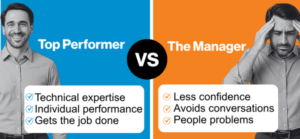
As an individual performer, success may have meant technical expertise, personal output, reliability and getting the job done.
As a manager, success suddenly depends on different skills: communication, delegation, coaching, feedback, confidence, handling difficult conversations, building trust and developing others.
That is a significant shift.
A top performer is often rewarded for their own results. A manager is responsible for helping others achieve their goals. Without preparation, that transition can be stressful for the individual and damaging for the wider team.
Why Promoting Without Preparation Weakens Leadership Bench Strength
 Leadership bench strength is the depth of prepared, capable leaders across an organisation. It is not just about having someone available to step into a role. It is about having people who are ready to lead when the business needs them.
 Leadership bench strength is the depth of prepared, capable leaders across an organisation. It is not just about having someone available to step into a role. It is about having people who are ready to lead when the business needs them.
When companies promote top performers without developing them, they risk weakening that bench.
Over time, this can create a fragile leadership pipeline. Managers feel underprepared. Teams feel unsupported. Senior leaders become frustrated by inconsistency. Talented employees may look elsewhere if they cannot see clear and positive progression.
This matters even more in growing organisations, where one underprepared manager can have a visible impact on performance, morale, communication and retention.
Why Fewer People Want to Become Managers
There is also a growing conversation around “conscious unbossing”. This describes employees choosing not to move into management because they see it as stressful, unsupported or not worth the personal cost.
 not to move into management because they see it as stressful, unsupported or not worth the personal cost.
Robert Walters has reported that many Gen Z professionals do not want to become middle managers, with common concerns including stress and low perceived reward.
If people see management as a role filled with pressure, conflict and responsibility, without enough training or support, it is hardly surprising that some will opt out.
That does not mean they lack ambition. It may mean they are making a rational decision based on what they have seen.
For employers, this creates a serious challenge. If talented people do not want to become managers, or leave because they cannot see a future, the organisation’s leadership pipeline suffers.
Promotion Isn’t Preparation
People want to see a future in their organisation. But progression should not simply mean being promoted into management and left to work things out alone.
A stronger approach is to prepare people before they are needed.
That starts with identifying leadership potential earlier. The best future leaders may not always be the loudest, most dominant or strongest individual performers. They may be the people who support others, communicate clearly, stay calm under pressure, build trust and help colleagues improve.
These are often the behaviours that matter most in management.
Organisations should then create development pathways before promotion happens. Future managers need opportunities to learn how to delegate, coach, give feedback, manage difficult conversations and communicate with confidence.
This preparation helps people make better decisions about their own career path. Some may decide management is right for them. Others may prefer a specialist, project leadership or client leadership route. Both can be valuable.
The mistake is assuming that people management is the only meaningful form of progression.
Traditional Approach |
Stronger Approach |
|---|---|
Identify top performers |
Identify leadership potential |
Promote quickly |
Develop before promotion |
Hope they succeed |
Build leadership skills |
Fix problems later |
Prepare people earlier |
Turning Accidental Managers into Intentional Leaders
The challenge isn’t that organisations promote top performers. Many outstanding leaders began as exceptional individual contributors.
The challenge is assuming promotion alone will prepare someone to lead.
Management requires a different set of skills. Success is no longer measured by personal performance but by the ability to develop, support and enable others to perform at their best.
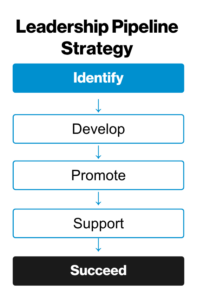
Organisations that build strong leadership bench strength recognise this distinction. They identify leadership potential early, invest in development before promotion and provide support during the transition into management.
The question is not simply:
“Who is our best performer?”
It is:
“Who has the potential to lead others successfully, and how are we helping them develop that capability?”
The organisations that answer that question well are far more likely to build confident managers, stronger teams and a sustainable pipeline of future leaders.